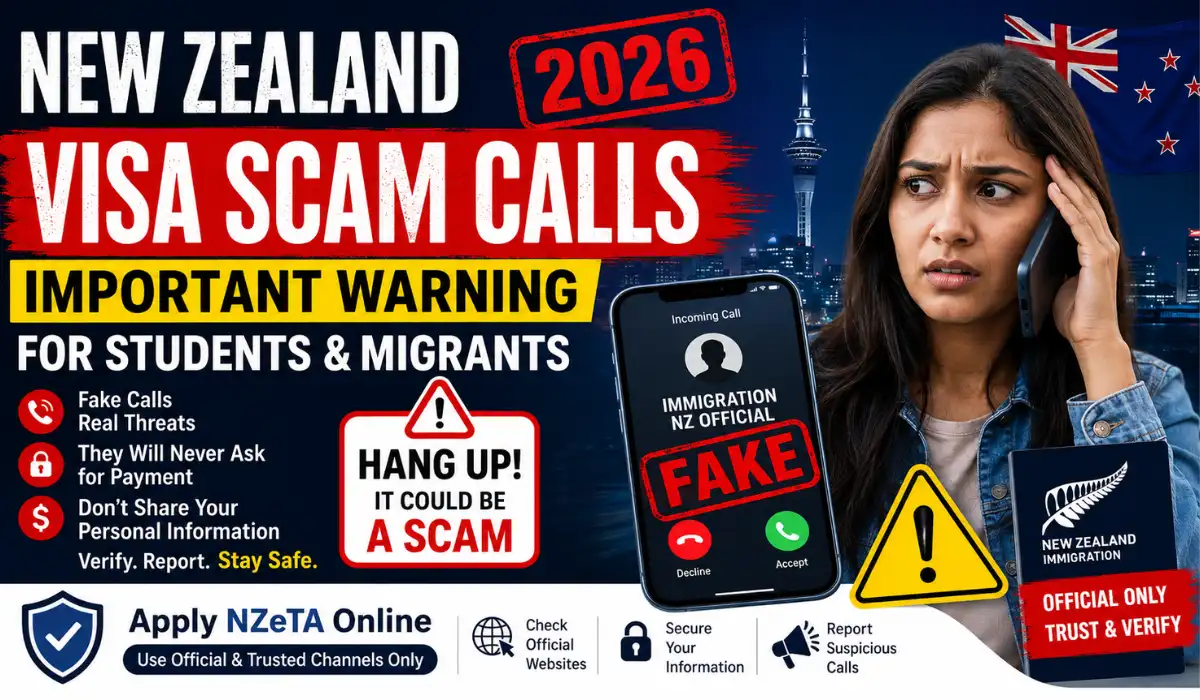
New Zealand Visa Scam Calls 2026: Important Warning for Students & Migrants
Table of Contents
The rise in New Zealand visa scam calls in 2026 has become a serious concern for international students, migrants, and visa holders. Immigration New Zealand (INZ) recently issued an official warning after scammers began targeting people using fake calls, threats, and payment demands.
These scams are designed to create panic and pressure victims into sharing sensitive information or sending money.
If you are planning to study, work, or travel to New Zealand, understanding these scams can help you stay safe.
What Are the New Zealand Visa Scam Calls?
According to Immigration New Zealand, scammers are pretending to be immigration officials and calling people using local New Zealand mobile numbers.
Common scam tactics include:
- Claiming there is a problem with your visa
- Threatening deportation or legal action
- Asking you to “press 1” to speak to an operator
- Demanding immediate payment
- Requesting passport or bank details
Immigration New Zealand confirmed these calls are completely fake.
Important Warning From Immigration New Zealand
Immigration New Zealand clearly stated:
- They will never ask for payment over phone calls
- They will not threaten arrest or deportation during calls
- Official communication happens through proper channels only
Any caller demanding urgent payment or sensitive information should be treated as suspicious.
Who Is Being Targeted?
The recent wave of New Zealand visa scam calls mainly targets:
- International students
- Migrant workers
- Visa holders
- New applicants
Scammers often target people unfamiliar with immigration systems and processes.
Signs of a Fake Immigration Call
You should be careful if the caller:
- Creates urgency or fear
Example: “Your visa will be cancelled immediately.”
- Demands instant payment
Especially through bank transfer or gift cards.
- Requests personal information
Like passport numbers or banking details.
- Uses threatening language
Such as arrest, deportation, or legal action.
These are major red flags identified by Immigration New Zealand.
How to Protect Yourself From Visa Scams
To stay safe from Immigration New Zealand scam attempts:
- Never Share Personal Information
Do not provide:
- Passport details
- Banking information
- OTPs or passwords
- Verify Through Official Channels
Always contact Immigration New Zealand directly if unsure.
Use – Apply Nzeta Online
Fake websites often use similar-looking addresses.
- Avoid Pressure Tactics
Scammers try to create panic so victims act quickly without thinking.
Real immigration officials do not force immediate action over phone calls.
- Report Suspicious Calls
INZ advises victims to:
- Hang up immediately
- Report scams to CERT NZ
- Contact Netsafe if inside New Zealand
Why Visa Scams Are Increasing in 2026
Experts believe scams are rising because:
- International migration is increasing
- More people are applying for visas digitally
- Travelers rely heavily on phone and online communication
Fraudsters are exploiting confusion around visa rules and immigration systems.
Apply NZeTA Online Safely
If you are eligible to travel to New Zealand, always apply NZeTA online through official or trusted platforms only.
Safe application tips:
- Double-check website URLs
- Avoid unknown agents demanding extra payments
- Use secure payment methods
Fake NZeTA websites are also becoming more common globally.
Why Students & Migrants Must Be Extra Careful
Students and migrants are often:
- Under stress about visa approvals
- Unfamiliar with immigration procedures
- More likely to panic during threatening calls
Scammers use this fear to manipulate victims quickly.
Future of Immigration Security
Immigration New Zealand is increasing:
- Public awareness campaigns
- Scam reporting systems
- Digital verification tools
Travelers should expect stronger security and identity verification systems in the future.
Final Thoughts
The increase in New Zealand visa scam calls in 2026 is a serious reminder to stay alert while dealing with immigration matters.
Remember:
- Immigration New Zealand never asks for payments over phone calls
- Never share sensitive information with unknown callers
- Always verify through official sources
And if you need travel authorization, make sure to apply NZeTA online only through trusted channels to avoid fraud and scams.