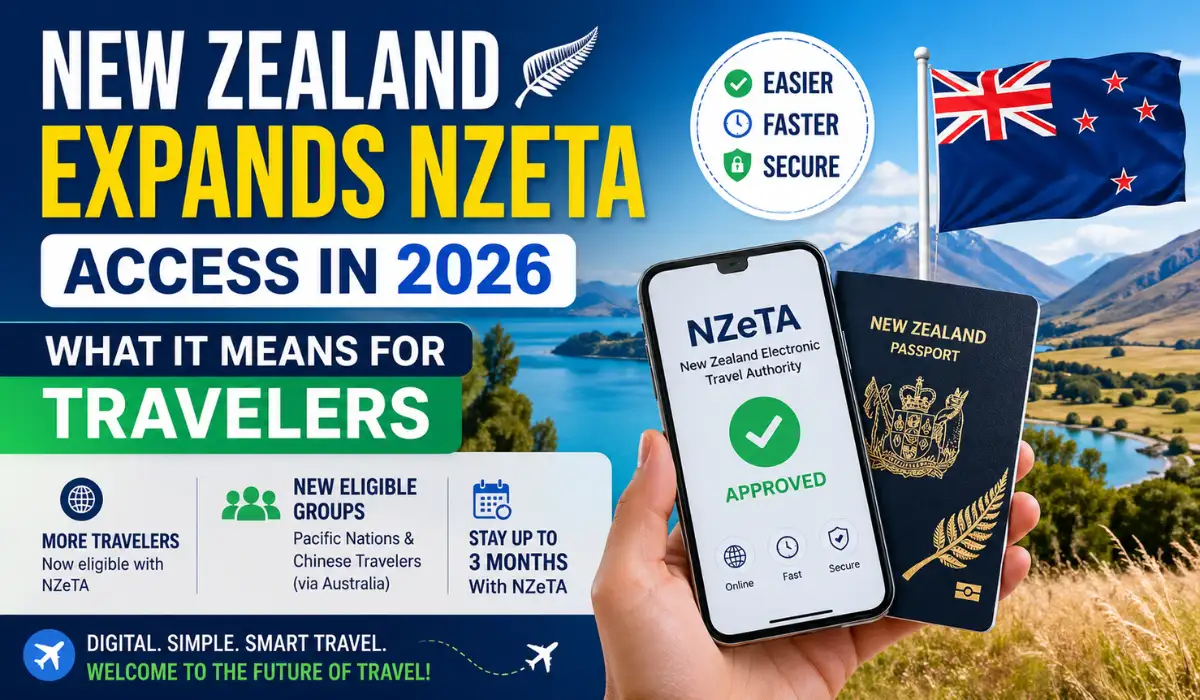
New Zealand Expands NZeTA Access in 2026: What It Means for Travelers
Table of Contents
New Zealand is making travel easier by expanding the use of its digital travel authorization system. Recent updates show that the country is broadening access to NZeTA, allowing more travelers to enter without applying for a NZeTA visa.
This move reflects a global trend toward simplified, digital border systems and aims to boost tourism while maintaining strong security controls.
What Is NZeTA?
The New Zealand Electronic Travel Authority is an electronic travel authorization required for visitors from visa-waiver countries.
It allows travelers to:
- Enter New Zealand without a full visa
- Stay for short-term visits
- Complete the process entirely online
Unlike a traditional visa, NZeTA is:
- Faster
- Simpler
- Digitally linked to your passport
What Has Changed?
New Zealand has announced expanded use of NZeTA through new pilot programs, making it easier for certain travelers to visit the country.
Key Update:
- Travelers from selected regions can now use NZeTA instead of applying for a visa
- The system is being extended to include new eligible groups traveling via Australia
This marks a significant shift in how New Zealand manages short-term travel entry.
Who Benefits From This Expansion?
The biggest beneficiaries of this update include:
Pacific Island Nations
Citizens from multiple Pacific countries can now:
- Travel from Australia to New Zealand
- Use NZeTA instead of applying for a visa
- Stay for up to 3 months
Chinese Travelers (via Australia)
Some Chinese passport holders:
- With valid Australian visas
- Can now enter New Zealand using NZeTA
This removes the need for a separate transit or visitor visa in many cases.
Why Is New Zealand Expanding NZeTA?
This decision is driven by several strategic goals:
1. Simplifying Travel
By replacing visas with NZeTA:
- Application time is reduced
- Entry becomes more accessible
2. Boosting Tourism
Easier entry means:
- More international visitors
- Faster tourism recovery
3. Strengthening Security
Even though the process is simpler:
- Digital screening ensures safety
- Traveler data is verified before arrival
Growing Importance of NZeTA
The expansion comes at a time when NZeTA is already playing a major role in New Zealand’s immigration system.
Over 1.6 million NZeTAs were issued in 2025
It has become a core tool for managing travel flows
This shows that the system is not just growing — it is becoming central to border control.
Processing & Validity
For eligible travelers, NZeTA offers:
- Processing time: Usually within 72 hours
- Validity: Up to 2 years
- Stay: Up to 3 months per visit
This makes it one of the fastest travel authorization systems globally.
What About US Citizens?
For travelers from the United States:
- NZeTA was already mandatory
- No major change in eligibility
- Still required before travel
However, the expansion highlights how New Zealand is:
Moving more travelers toward digital authorization instead of visas
Important Limitations
Even with expanded access, NZeTA is not for everyone.
You still need a traditional visa if you:
- Are from a non-eligible country
- Plan long-term stays
- Want to work or study
For example, travelers from countries like India must still apply for a full visitor visa.
What This Means for the Future
New Zealand’s move signals a broader shift:
Fewer visas, more digital travel systems
We can expect:
- More countries to be added to NZeTA eligibility
- Faster processing systems
- Greater use of AI and automation in immigration
This aligns with global trends seen in:
Europe (ETIAS)
USA (ESTA)
Must know
The expansion of the New Zealand Electronic Travel Authority marks a major step toward modernizing travel to New Zealand.
By allowing more travelers to enter using a simple digital authorization instead of a full visa, the country is making travel:
- Faster
- Easier
- More accessible
While the changes mainly benefit Pacific and certain transit travelers for now, they highlight a future where digital travel approvals replace traditional visa systems.