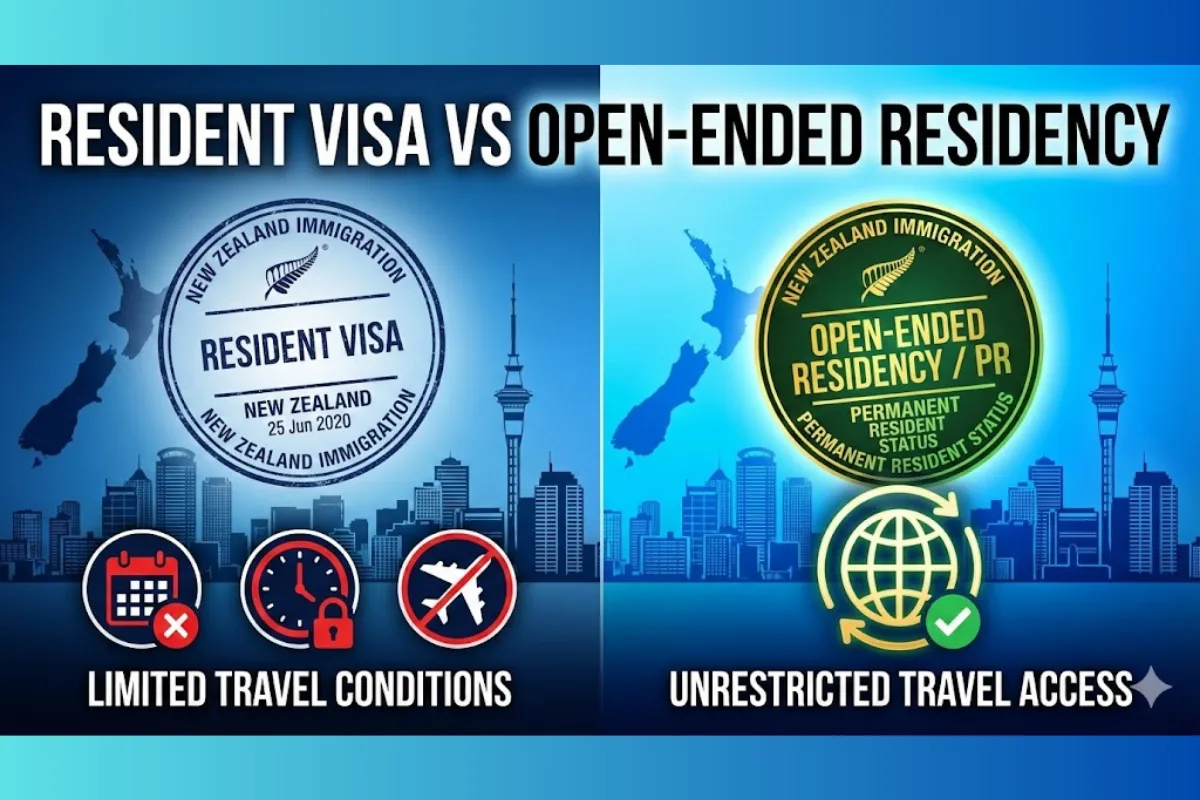
New Zealand Resident Visa vs Open-Ended Residency: What Changes After 2+ Years?
Table of Contents
Moving to another country is exciting — and a little scary. You want to know: when does my visa stop being “temporary”? Can I travel for family visits without worry? What exactly is “open-ended” residency? This article explains the difference between a New Zealand Resident Visa and open-ended residency (often called new zealand pr) in simple English. Read all the way through and you should have no doubts about the steps, the risks, and what to plan for.
The short answer
A New Zealand Resident Visa gives you the right to live, work, and study in New Zealand. But most resident visas include travel conditions that allow you to leave and return for a limited time — commonly two years. After you have held your resident visa and met the rules for about two years, you can apply for a Permanent Resident Visa (open-ended residency or new zealand pr). That permanent visa removes the time limit on your travel rights.
What each term really means
- New Zealand Resident Visa: This visa lets you make New Zealand your home. You can live, work, and study. But usually it comes with a travel condition — a date until which you can freely leave and re-enter New Zealand. If you leave after that date without having the right visa, you may not be able to return as a resident.
- Open-ended residency / new zealand pr: After meeting the residency requirements (usually holding a resident visa for 2 years and meeting presence/commitment rules), you can get a Permanent Resident Visa. With that, there is no limited travel condition — you can leave and come back whenever you like.
These two lines show the practical difference: the resident visa gives you life in New Zealand but may limit your re-entry date; open-ended residency removes that limit.
Why the 2+ year mark matters
Most resident visas have travel conditions that commonly last for 24 months from grant or first arrival. If you remain in New Zealand and meet the visa conditions during that time, you become eligible to apply for the Permanent Resident Visa after having the resident visa for two years. The permanent visa is what people usually mean by open-ended residency.
In human terms: treat the first two years as a window. If you plan long trips or to live overseas during that time, you must check your travel conditions first. Leaving after travel conditions expire can cause real trouble — you might lose your resident status and be unable to re-enter easily.
How to move from resident to permanent resident — simple steps
- Know your dates. The first thing is to know exactly when your New Zealand Resident Visa was granted and when the travel condition expires.
- Meet the presence rules. For permanent residence, you usually must show you spent enough time in New Zealand on your resident visa (for many people it’s at least 184 days in each of two 12-month periods). That shows your commitment to living here.
- Apply for Permanent Residence when eligible. Once you meet the rules, you apply to Immigration New Zealand for the Permanent Resident Visa (open-ended). This removes the travel limit.
- If you must travel early, be careful. If you need to go overseas before becoming permanent, check if you can extend your travel conditions — sometimes extensions are possible but rules and timing matter.
What happens if travel conditions expire while you’re overseas
If your New Zealand Resident Visa’s travel condition has expired and you are outside New Zealand, you risk not being allowed back in as a resident. There can be remedies — like applying for a permanent resident visa or an extension — but those options depend on timing and eligibility. In short: don’t leave home without checking your travel-condition date.
Practical benefits of open-ended residency
Becoming a permanent resident (open-ended) removes a lot of everyday stress:
- You can travel for family emergencies at short notice.
- You can take a temporary job overseas without worrying about losing your ability to return.
- You have clearer access to benefits and a smoother path to citizenship if you decide to apply.
Those benefits are why many people plan carefully to get from a resident visa to new zealand pr once eligible.
NZeTA — when you still need it, and how to check
A quick note because people often ask: if you already hold a New Zealand Resident Visa, you usually do not need an NZeTA to visit New Zealand. The NZeTA (New Zealand Electronic Travel Authority) is mainly for short-term visitors from visa-waiver countries. If you are unsure, you can Submit NZeTA Online using the official NZeTA application site.
If you have applied for an NZeTA and want to check progress, use the official tool to see your NZeTA Visa Status — you will need your reference number and the email you used when you applied. That check tool is fast and official.
Real-life tips — do these to avoid surprises
- Write your travel-condition expiry date on your calendar the day your New Zealand Resident Visa is granted.
- Don’t book long overseas stays before you confirm you meet the two-year rules or have applied for the permanent resident visa.
- If you must travel early, check if you can extend travel conditions — do this well before you leave.
A final thought — plan, but stay calm
Think of the New Zealand Resident Visa as your ticket to live in New Zealand. The travel condition attached to that ticket often has a two-year expiry. After two years and when you meet the rules, you can upgrade to new zealand pr, which is like getting a ticket that works forever for comings and goings. The rules can seem technical, but a little planning and checking the official pages will keep you safe and stress-free.